Africa’s forests, soils, freshwater systems and remarkable biodiversity are more than environmental treasures. They underpin food production, livelihoods, energy security and economic resilience. The challenge is to translate this natural wealth into lasting public benefit while protecting the ecosystems essential to the continent’s long-term prosperity.
Two developments highlight the connection between environmental sustainability and economic transformation: a major solar-plus-storage project in Egypt and renewed calls for greater biodiversity financing at the 17th Conference of the Parties to the Convention on Biological Diversity (COP17) in Yerevan, Armenia.
READ ALSO: Africa’s Biodiversity: Building Prosperity Through Conservation and Community Participation
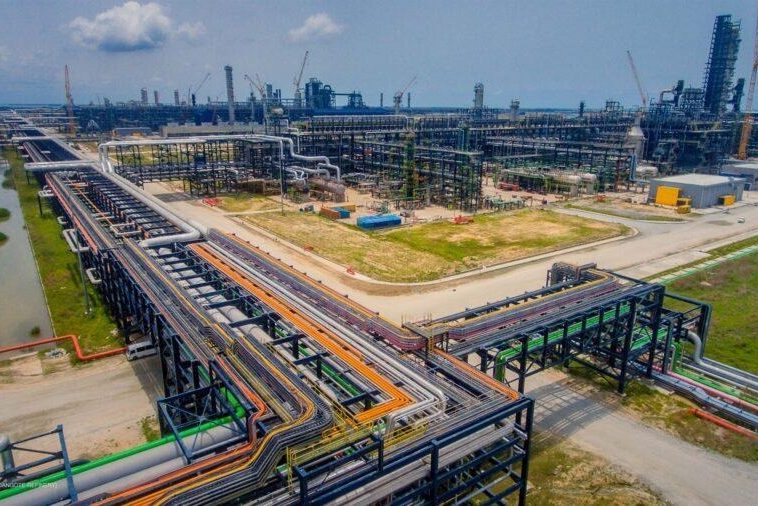
The European Bank for Reconstruction and Development (EBRD) has arranged a $566 million debt financing package for Egypt’s Nefer Minya project, which is expected to become Africa’s largest solar-plus-storage facility. With 1.2 gigawatts (GW) of solar photovoltaic capacity and a 600-megawatt-hour (MWh) battery storage system, the project represents a significant investment in clean energy infrastructure.
Located in Egypt’s Minya governorate, the facility is owned by Infinity Power (51 per cent) and HAU Energy (49 per cent). The total project cost is about $764 million, and commercial operations are scheduled to begin in September 2027. Under a 25-year power purchase agreement with the Egyptian Electricity Transmission Company, the plant is expected to supply electricity to more than 1.4 million homes and avoid over 1.5 million tonnes of carbon dioxide emissions annually.
The EBRD arranged up to $265 million of the financing package, comprising a $160 million loan from its own funds, a $75 million loan from Bank of Jordan and up to $30 million in concessional financing from the Climate Investment Funds’ Clean Technology Fund. Germany’s DEG, the Netherlands’ FMO and France’s Proparco completed the wider financing arrangement. The remaining project costs will be supported through additional debt financing and approximately $198 million in sponsor equity.
The project’s battery storage system is particularly significant. By storing electricity generated during the day for use during evening peak demand, it will help improve grid reliability and make solar power available beyond daylight hours. This capability supports Egypt’s ambition to increase renewable energy’s share of electricity generation to 42 per cent by 2030 while addressing the challenges of balancing supply and demand.
Egypt’s wider renewable energy expansion reflects the scale of this ambition. The country is investing in solar, wind and energy storage to diversify its electricity mix and strengthen energy security. Nefer Minya is expected to contribute to these efforts by combining large-scale generation with storage infrastructure.
While Egypt advances its clean energy transition, African leaders and development institutions are also confronting another critical challenge: financing the protection of the continent’s natural capital.
COP17 opened in Yerevan on 19 October 2026 and runs until 30 October. The conference represents the first global review of collective progress under the Kunming-Montreal Global Biodiversity Framework, adopted in 2022. The framework establishes targets for halting and reversing biodiversity loss by 2030.
Under the theme “Taking action for nature”, discussions are focusing on implementation, financing and the measures required to translate international commitments into tangible outcomes. IUCN President Razan Al Mubarak has warned that progress remains uneven and too slow to secure the 2030 targets without accelerated action.
The African Development Bank (AfDB) is using the summit to advocate increased financial and technical support for African countries implementing their National Biodiversity Strategies and Action Plans. The Bank estimates Africa’s natural capital at $7.6 trillion, highlighting the economic importance of ecosystems and natural resources that remain inadequately reflected in national accounts, budgets and investment decisions.
Natural capital supports agriculture, tourism, fisheries, forestry and other sectors that sustain millions of livelihoods across the continent. However, the benefits of these resources are vulnerable to ecosystem degradation, climate change and unsustainable exploitation. Protecting them therefore requires more than conservation commitments; it demands financing mechanisms that can deliver measurable results.
Progress is emerging through initiatives such as the United Nations Development Programme-led Biodiversity Finance Initiative (BIOFIN), which has helped mobilise more than $2.7 billion for nature across 41 countries. Biodiversity Finance Plans are also being developed and implemented across Africa and the Arab States, offering governments practical approaches to identifying funding gaps and directing resources towards conservation priorities.
The AfDB delegation, led by Anthony Nyong, Director for Climate and Green Growth, is participating in finance and ministerial discussions at COP17. The Bank is also co-hosting the Multilateral Development Banks Pavilion, with discussions covering capital markets for protected areas, blended finance for a nature-positive bioeconomy and stronger collaboration among development finance institutions. Its wider work includes the Great Green Wall Initiative and biodiversity-related programmes in the Congo Basin, Lake Chad Basin, Kenya, Sierra Leone and Morocco.
Several African countries are also demonstrating how natural capital accounting can improve policy decisions. Rwanda has developed accounts covering land, water and minerals, while Zambia uses forestry, water and land accounts to inform national development planning. South Africa has produced experimental estimates of biodiversity-based tourism’s economic and employment contributions, illustrating how ecosystem value can be reflected in economic analysis.
These initiatives point to a broader opportunity: positioning environmental protection as an integral part of economic planning rather than a competing priority.
Nefer Minya and the COP17 agenda illustrate complementary dimensions of nature-positive development. Clean-energy infrastructure can strengthen electricity supply while reducing emissions, while biodiversity financing can protect the ecosystems that sustain food production, water security and livelihoods. Both require effective institutions, transparent financing and long-term planning to deliver meaningful results.
For Africa, the priority is to ensure that investment translates into reliable services, healthier ecosystems and broadly shared economic benefits. As global attention turns to COP17, the continent’s natural wealth presents an opportunity not simply to attract more financing, but to build a development model that balances economic progress with environmental responsibility.