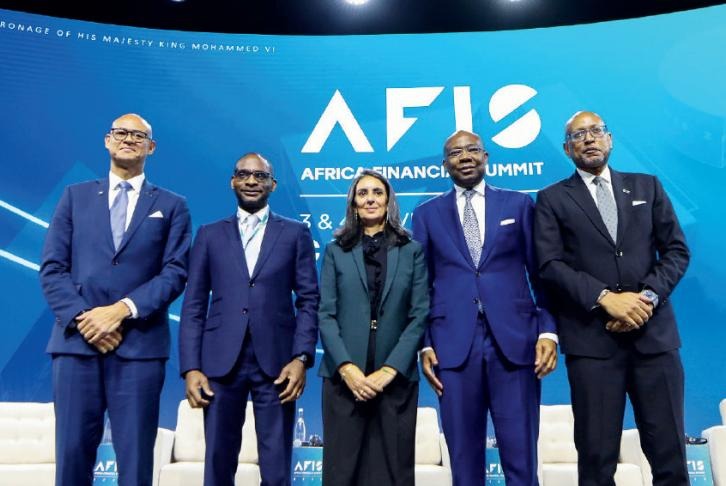
Can Africa finance more of its development using the capital already available within its own economies? This question is taking centre stage at the Africa Financial Summit (AFIS) 2026, which brings together financial leaders, policymakers, regulators and investors in Luanda, Angola, on 3–4 November.
Held under the theme Making Capital Count: Unlocking Growth Through African Finance, the summit examines how African financial institutions can channel more resources into productive sectors, strengthen regional financial integration, and expand access to long-term financing for businesses.
READ ALSO: Mainstreaming Natural Capital: Africa’s Path to Nature-Positive Development Finance
The African Development Bank (AfDB), a key summit partner, is championing greater domestic capital mobilisation through its New African Financial Architecture for Development (NAFAD) initiative. Led by AfDB President Dr Sidi Ould Tah, the institution is advocating a stronger financial framework capable of mobilising African savings and directing them towards development priorities.
The urgency is considerable. Africa faces an estimated US$400 billion annual development financing gap, despite the presence of substantial financial resources within its economies. Pension funds, insurance companies, commercial banks, sovereign investment institutions and domestic capital markets represent important sources of financing that could support infrastructure, manufacturing, agriculture and private-sector expansion.
The challenge is ensuring that these resources are effectively mobilised and invested. African financial institutions have expanded their operations and strengthened their balance sheets, yet many businesses continue to struggle to obtain affordable, long-term financing. Small and medium-sized enterprises, in particular, face barriers associated with high borrowing costs, limited collateral and insufficient access to suitable financial products.
Through NAFAD, the AfDB is promoting mechanisms that can help bridge this gap. These include guarantees, risk-sharing instruments, first-loss capital and expanded local-currency financing. Such arrangements can reduce investment risks, encourage private-sector participation and make more development projects attractive to institutional investors.
The summit also highlights the importance of strengthening connections between African financial markets. Businesses operating across national borders require efficient payment systems, accessible trade finance and financial institutions capable of supporting transactions across different currencies and regulatory environments. Deeper integration can reduce transaction costs, encourage regional commerce and strengthen the implementation of the African Continental Free Trade Area.
Angola’s hosting of the summit provides an important platform for examining these opportunities. The country’s economic diversification ambitions, particularly across agriculture, manufacturing, mining and infrastructure, reflect the wider need for financial systems that can support productive investment beyond traditional commodity sectors.
Digital transformation is another important dimension of the discussions. Financial technology, digital payments and improved data systems can help institutions assess business risks, reduce transaction costs and extend financial services to underserved enterprises and communities. These developments can make financing more accessible while improving the efficiency of African financial markets.
Nevertheless, mobilising domestic capital requires more than creating new financial instruments. Investors need confidence in regulatory frameworks, macroeconomic stability, transparent institutions and the commercial viability of projects. Governments must also strengthen project preparation so that available financing can be directed towards investments with clear economic and social benefits.
The discussions in Luanda therefore reflect a broader shift in Africa’s development financing strategy. Rather than relying predominantly on external funding, the continent is exploring ways to make better use of its domestic savings, institutional investors and financial infrastructure.
For Africa, the opportunity is to transform financial-sector growth into wider economic productivity. The success of this approach will depend on whether capital reaches businesses, supports infrastructure, expands industrial capacity and creates sustainable employment.
Ultimately, Africa’s financial strength will be determined not simply by the size of its banking institutions or investment funds, but by how effectively they finance the continent’s economic transformation.