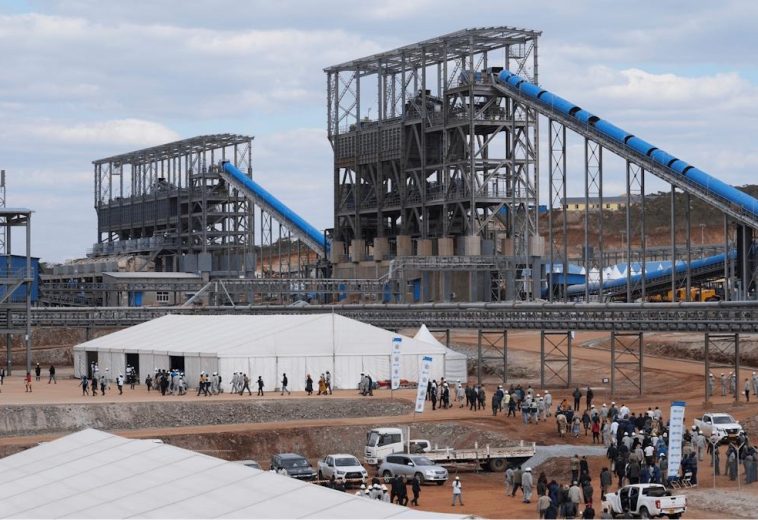
Africa is seeking a greater share of the wealth generated from its natural resources. From Guinea’s bauxite deposits to Zimbabwe’s lithium reserves, governments are encouraging companies to process more minerals locally instead of exporting raw materials for transformation elsewhere. The ambition is straightforward: create jobs, develop industries, increase export earnings and strengthen Africa’s position in global supply chains.
Yet a fundamental obstacle threatens this industrial strategy. Without reliable and affordable electricity, the refineries, smelters and processing plants required to add value to minerals may struggle to operate competitively. Recent developments across the continent have highlighted the challenge facing African governments and investors as they seek to expand domestic mineral processing.
READ ALSO: Zambia’s Copper Comeback: Mining Investments Power a New Era of Economic Growth
Guinea illustrates both the opportunity and the difficulty. The country has become the world’s leading bauxite producer and exporter, supplying a raw material used to manufacture alumina and, subsequently, aluminium. Its government is seeking to expand domestic processing, with several alumina refineries planned or under construction and ambitions to develop a more extensive industrial base. The proposed facilities could transform the country’s role in the global aluminium supply chain.
Such a transition could significantly change the economic value retained within the country. Mining generates revenue and employment, but processing creates additional opportunities in engineering, maintenance, logistics, industrial services and specialised manufacturing. A stronger domestic processing industry could also help develop technical skills and encourage the emergence of local suppliers.
However, Guinea’s electricity supply remains a serious constraint. The country relies heavily on hydropower, and available generation is insufficient to meet all its industrial ambitions. Seasonal variations also affect supply, with electricity availability changing throughout the year. The gap between current capacity and industrial demand illustrates why resource wealth alone cannot guarantee industrialisation.
Zimbabwe faces a related challenge in its lithium industry. The country has been encouraging domestic processing as it seeks to capture more value from minerals used in batteries and energy storage. Restrictions on exports of unprocessed lithium concentrate are intended to encourage investment in local processing facilities. However, these policies can only deliver their intended benefits if processing capacity, electricity supply, technical expertise and access to markets expand alongside them.
These examples reveal an important distinction between announcing industrial policy and building the conditions necessary to implement it. Export restrictions may encourage companies to invest in local facilities, but they cannot independently create the electricity, transport networks, financing and processing capacity those facilities require. If infrastructure lags behind policy, producers may face higher costs, delayed projects and reduced competitiveness.
South Africa provides another warning. Its ferrochrome and steel-processing industries have faced pressure from high energy costs and unreliable electricity. The experience demonstrates that even an established industrial base can lose competitiveness when power becomes too expensive or unpredictable. For African countries seeking to build new processing industries, energy policy must therefore be considered an essential part of industrial policy, not a separate concern.
The solution requires a coordinated approach. Governments need to expand electricity generation while investing in transmission and distribution networks. Hydropower, solar, wind, gas and other suitable energy sources can contribute according to each country’s resources, costs and environmental circumstances. Cross-border electricity trade can also help countries balance seasonal shortages and share infrastructure more efficiently.
Industrial planners must equally match energy investment with realistic assessments of mineral supply, processing demand and access to markets. Refineries and smelters require substantial upfront capital and dependable operations over many years. Investors need confidence that policies will remain predictable, infrastructure will be available, and products will reach buyers at competitive prices.
Regional cooperation offers an additional opportunity. Countries with mineral deposits, energy resources, ports and transport corridors can coordinate investments rather than pursue disconnected projects. Regional power pools and cross-border infrastructure could support industrial clusters, reduce duplication and make large-scale processing more viable.
For African leaders, the objective should not simply be to process every mineral domestically regardless of cost. Each project must be commercially and environmentally sustainable, with a credible assessment of its energy requirements, market prospects and long-term economic benefits. Local value addition should strengthen competitiveness, not create expensive facilities that cannot operate reliably.
Africa possesses the resources needed to play a more influential role in global manufacturing and the energy transition. The next step is to build the infrastructure that allows those resources to support productive industries at home. Reliable electricity will be central to that effort.
The continent’s mineral wealth creates the opportunity. Affordable power, sound policy and disciplined investment will determine how much of that opportunity becomes lasting economic value for African people.