The 51st Ordinary Session of the African Union (AU) Permanent Representatives’ Committee (PRC) convened on 12 January 2026 at the AU Headquarters in Addis Ababa, Ethiopia, marking a critical juncture for continental governance and strategic planning. As the preparatory forum ahead of the 48th Ordinary Session of the Executive Council and the 39th AU Summit, scheduled for 14–15 February 2026, the session brought together AU ambassadors, commissioners, and high-level officials to deliberate on peace, institutional reform, sustainable development, and the overarching goals of Agenda 2063.
Opening the session, AU Commission Chairperson H.E. Mahmoud Ali Youssouf emphasised the 2026 theme: “Assuring Sustainable Water Availability and Safe Sanitation.” This focus builds upon the outcomes of the African Climate Summit of September 2025 and positions water as a critical enabler for Africa’s development, security, and resilience. With global climate attention turning to COP30 in Brazil later this year and Ethiopia designated to host COP32 in 2027, the discussions underscored Africa’s role in shaping international climate and water security agendas.
READ ALSO: Inside the AU–EU Luanda Declaration: Security, Sustainable Growth and Global Influence
Water scarcity affects over 300 million Africans today, according to the United Nations World Water Development Report 2025, limiting economic growth and compounding humanitarian challenges. The AU’s renewed emphasis on water management is therefore central to achieving both regional stability and the broader developmental goals of Agenda 2063, particularly Aspiration 6, which envisions “An Africa whose development is people-driven, relying on the potential of African people, especially women and youth.”
Security and peace remained high on the PRC’s agenda, reflecting ongoing crises in regions including Eastern Democratic Republic of Congo, Sudan, Libya, and the Sahel. H.E. Youssouf highlighted the African Peace and Security Architecture (APSA) as instrumental in addressing these challenges, noting that the AU’s Peace and Security Council, Special Envoys, Panels of the Wise, and Commissioners are actively engaged in conflict resolution and preventive diplomacy.
Parallel to the PRC deliberations, the 9th China-African Union Strategic Dialogue took place, focusing on security cooperation and the China-proposed Outlook on Peace and Development in the Horn of Africa. These discussions emphasised the importance of multilateral partnerships in stabilising fragile regions while safeguarding Africa’s strategic autonomy.
The Compass of Continental Governance
Institutional reform was another key area of focus, building on a trajectory championed by H.E. President William Samoei Ruto, the AU Champion on Institutional Reform. Appointed in February 2024, President Ruto has steered efforts to improve operational effectiveness, financial sustainability, and governance within the AU, succeeding President Paul Kagame, who led reforms from 2016.
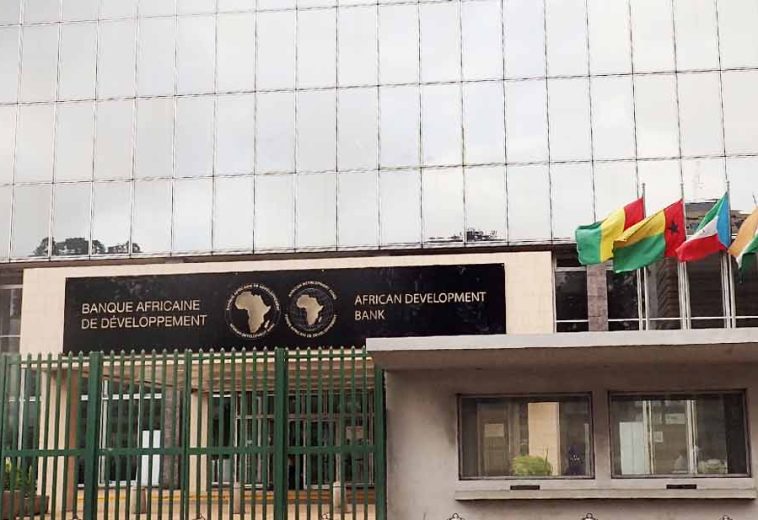
The PRC reviewed progress under the Skills Audit and Competency Assessment (SACA), which has regularised staff appointments and strengthened financial discipline. Partnerships with China facilitated the mobilisation of USD 30 million for AU facility rehabilitation, while Afreximbank has committed funding to renovate Africa House. Discussions with the African Development Bank aim to enhance the value of AU real estate and financial assets, illustrating a strategic approach to institutional resilience.
Aligning with Agenda 2063
Throughout the session, the PRC deliberated on reports reflecting Agenda 2063 priorities, from infrastructure development and humanitarian affairs to the promotion of free movement across the continent. H.E. Amb. Prof. Miguel Bembe, Chair of the PRC, described the committee as the “guardian of political and technical consistency,” emphasising that transparent processes and visionary pragmatism are essential to translating Agenda 2063’s aspirations into tangible outcomes.
Agenda 2063, Africa’s blueprint for inclusive and sustainable development, continues to guide policy across all AU organs. The PRC’s draft decisions, once reviewed by the Executive Council, will be forwarded to the Heads of State at the upcoming Summit for adoption, reinforcing a strategic link between technical deliberations and political endorsement.
Africa’s Engagement on the World Stage
The session underscored the AU’s increasing engagement in global affairs. In 2025, African states participated actively in TICAD 9, the 7th EU–AU Summit, the Africa Infrastructure Summit, the African Climate Summit, the Afro-American Business Forum, and the G20 Summit hosted by South Africa. Amid rising protectionism, visa restrictions, and shrinking financial resources globally, H.E. Youssouf called for strengthened continental solidarity and self-reliance, asserting that Africa must safeguard its collective interests while projecting its voice internationally.
Charting a Course Toward Sustainability and Stability
The 51st PRC session reflects the AU’s strategic resolve to synchronise peace, development, and governance ahead of the 39th Summit. With sustainable water management, institutional reform, and peacekeeping as guiding pillars, the committee’s deliberations aim to set a coherent agenda for 2026 and reinforce Africa’s standing on the global stage. As the continent navigates complex internal and external challenges, the outcomes of this session will play a pivotal role in shaping the continent’s trajectory toward the aspirations of Agenda 2063, embodying a vision of a prosperous, peaceful, and resilient Africa.