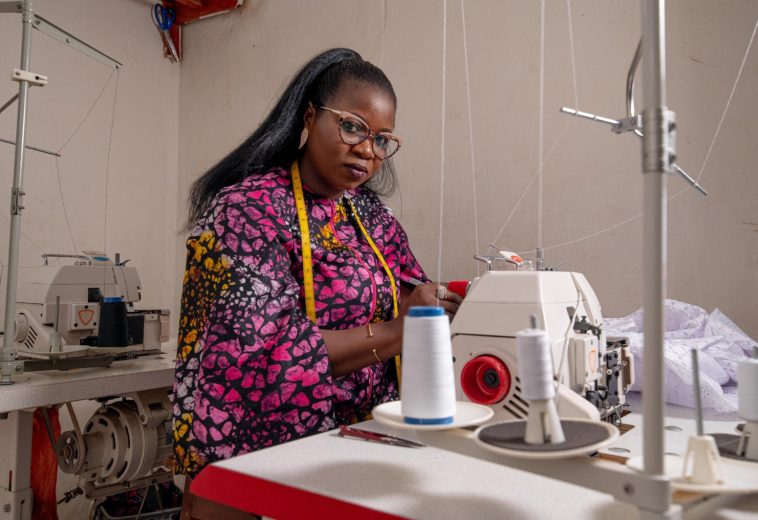
Small and medium-sized enterprises are central to Africa’s employment, innovation and economic growth. Yet many struggle to secure the finance needed to expand. Even when investment becomes available, businesses may lack the systems, skills and market access required to turn that capital into sustainable growth.
The Mastercard Foundation Africa Growth Fund’s learning work highlights a critical distinction: capital does not automatically create jobs. Between receiving investment and employing more people, a business must strengthen its operations, improve productivity, reach customers and generate reliable revenue. For Africa, the lesson is clear: expanding access to finance must go hand in hand with building enterprises capable of using it effectively.
The International Finance Corporation (IFC) estimates that 40 per cent of formal micro, small and medium-sized enterprises (MSMEs) in developing economies have unmet financing needs, representing an annual credit gap of approximately US$5.2 trillion. This scale of exclusion makes access to finance an urgent development priority. However, money alone cannot resolve weak financial management, inefficient production, poor governance or limited understanding of customer demand. Without the capacity to manage additional resources, borrowing can increase financial pressure rather than create growth.
A business receiving investment may first need to improve its cash-flow management, strengthen financial reporting or address production bottlenecks. Expanding its workforce before these fundamentals are established can increase operating costs without improving productivity. Finance can support these changes, but it cannot replace the management expertise and operational discipline required to sustain them.
The value of enterprise support is also evident in the need to preserve existing jobs. A West African business cited in the Fund’s learning reportedly retained 99 per cent of its workforce through a restructuring process. The example highlights an important dimension of employment policy: protecting existing livelihoods can be as significant as creating new positions. Investors should therefore distinguish between jobs created, jobs retained and jobs improved. Each represents a different outcome and should be measured accordingly.
A Nigerian furniture manufacturer offers another illustration. Despite having a substantial backlog of orders, the company faced a disconnect between its sales commitments and production capacity. Support focused on improving coordination between the two functions, helping the business improve revenue and customer satisfaction, with employment growth following later. The experience demonstrates that demand does not automatically translate into successful delivery or sustainable income. Businesses also need the systems and expertise to meet their commitments.
The support required will differ across sectors. A seasonal agricultural enterprise may need working capital aligned with planting and harvesting cycles, while a manufacturer may require machinery, technical expertise and production management. A service-based business may benefit more from staff training, digital systems and improved customer relations. Effective financing strategies must recognise these differences rather than apply a uniform model to every enterprise.
Employment quality must also remain part of the investment equation. An increase in headcount does not, on its own, demonstrate inclusive development. The International Labour Organization’s decent-work framework emphasises productive employment, fair income, workplace security, social protection and equal opportunities. Investors should consider whether workers receive fair wages, operate in safe conditions and have opportunities for professional development. They must also examine who benefits from new opportunities, particularly women and young people who continue to face barriers to finance, business ownership and formal employment.
The scale of Africa’s employment challenge reinforces the urgency of this approach. The African Development Bank estimates that between 10 million and 12 million young people enter the continent’s labour market each year, while only about three million formal jobs are created annually. Closing this gap requires more than increasing investment volumes. It demands productive enterprises capable of expanding, competing and creating decent work.
Businesses also operate within wider economic systems. Their performance depends on customers, suppliers, skilled workers, reliable energy, transport infrastructure, payment systems, supportive regulation and access to markets. Investors cannot address every constraint independently. Governments must strengthen infrastructure and improve the business environment; financial institutions must provide suitable financing; training institutions must develop relevant skills; and large companies can support smaller suppliers through procurement opportunities. Coordinated action is essential because these constraints are often interconnected.
For investors and policymakers, the implications extend to how results are measured. Tracking capital deployed and jobs recorded at a single point offers only a partial picture. A stronger assessment should examine improvements in financial management, production capacity, revenue, market access and business resilience. It should also distinguish between employment created, retained and improved, while assessing the stability, safety and inclusiveness of those positions.
Africa’s SME agenda must therefore move beyond the assumption that access to finance alone will deliver transformation. Capital remains indispensable, but its impact depends on the strength of the enterprises receiving it and the economic systems supporting their growth. When financing is matched with relevant expertise, stronger operations and access to markets, African businesses are better positioned to expand, compete and create sustainable employment.
The objective is not simply to put more money into enterprises, but to ensure that investment builds businesses capable of turning opportunity into lasting economic value.