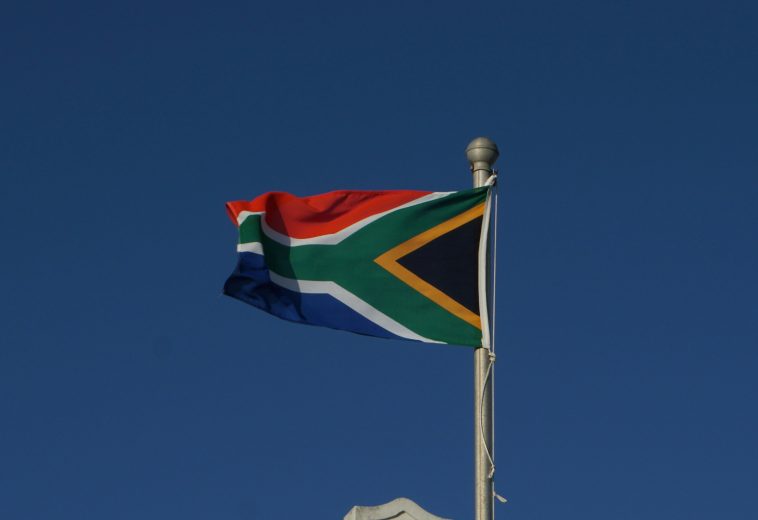
South Africa’s successful hosting of the 2025 G20 Summit has redefined what global cooperation means and enabled the Global South to finally take centre stage. Johannesburg hosted the 2025 G20 Summit amid political tension, diplomatic disputes, climate urgency, and a sense that global power dynamics are shifting. Despite the U.S. boycott, protocol controversies, and fragmented geopolitics, South Africa secured a unified Leaders’ Declaration addressing climate change, debt reform, and multilateral cooperation.
For South Africa, the summit was more than a diplomatic achievement. It clarified the country’s global ambitions, highlighted Africa’s rising prominence, and showcased a political order forming outside Washington, Brussels, and Beijing. Hosting the first G20 in Africa signalled the continent’s growing importance in global governance. The bloc represents 87% of global GDP, 62% of the world’s population, and over 75% of global trade. South Africa invested approximately R700 million ($38.7M) to host the event against a backdrop of stalled UN SDGs and rising wealth inequality, with the richest 1% capturing 41% of all new wealth between 2000 and 2024.
READ ALSO: Africa’s G20 Moment: Power, Policy and the Pursuit of Economic Transformation
During its presidency (Dec 2024 – Nov 2025), South Africa shifted the G20 agenda toward Global South priorities: debt relief, climate finance, energy transition, and industrialisation rooted in Africa’s critical minerals. Johannesburg argued that addressing global challenges requires elevating Africa rather than sidelining it. President Ramaphosa brokered a consensus despite a fractured G20 and stalled climate diplomacy after COP30, reinforcing South Africa as a bridge between developed and developing nations, BRICS+ and the West, and climate-vulnerable and energy-dominant economies.
The summit elevated Africa from a peripheral topic to a central one, advancing priorities including debt relief, affordable climate finance, energy-transition funding, critical minerals industrialisation, and fairer trade reforms. A historic declaration recognised the need for scaled climate finance for developing countries, a milestone pursued since 2009. Expanded BRICS+ membership and stronger coordination among developing nations reflected the Global South’s rising confidence, while South Africa showcased its capacity to host major events, deepen ties with key partners, and promote local industries through B20, C20, and T20 side engagements.
It reflected decades of South Africa’s efforts to secure African representation and influence global decision-making. As the continent’s most industrialised economy, a diplomatic mediator, and a BRICS member, South Africa translated years of advocacy into action. The absence of the U.S. allowed developing nations to pass climate language normally blocked and reshape coalitions independently. Germany criticised the U.S., Brazil emerged as a climate and development voice, and African nations coordinated positions with unprecedented unity. The summit revived climate ambition, embedding adaptation, debt restructuring, renewable energy, and support for vulnerable states into global economic discussions.
Africa’s critical minerals became central to global strategy. South Africa emphasised moving beyond raw-material exports toward local industrialisation to meet rising demand for EVs, batteries, and renewable infrastructure. The G20 acknowledged value addition within Africa, positioning the continent as a partner rather than merely a supplier in the green transition.
Challenges remain as diplomatic tensions with the U.S. could affect bilateral cooperation. Domestically, South Africa faces low growth, load shedding, high unemployment, and currency volatility, amplified by criticism over the summit’s R700 million cost. Globally, U.S.–U.S.-China rivalry, the Russia–Ukraine conflict, weak climate commitments, and rising nationalism threaten multilateral progress.
The summit opened opportunities for African integration into global governance, reinforcing the African Union’s role as a permanent G20 member and expanding the continent’s influence in shaping policy. The declaration provides leverage to unlock climate and development finance, accelerate Just Energy Transition funding, attract green infrastructure investment, and advance African-led debt restructuring frameworks. It also strengthens South Africa’s identity as a diplomatic hub, a leading Global South voice, and a mediator in a multipolar world. If the Johannesburg model continues, the next decade could see more Global South-led summits, stronger climate justice frameworks, and a fairer international financial system.
Ultimately, the 2025 Johannesburg G20 Summit represents a pivotal moment in geopolitics. South Africa turned diplomatic tension into a strategic advantage, elevated African priorities, and demonstrated that the continent is no longer a passive observer but an active architect of global decision-making. The summit’s impact will influence international cooperation and the evolving global order for years to come.