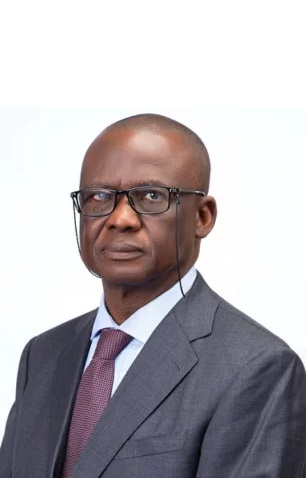
Agriculture remains the economic backbone of Niger, employing more than 80 per cent of the population and contributing roughly 40 per cent of national GDP, yet it is also the sector most exposed to climate volatility, insecurity, and chronic underfinancing. According to the World Bank, less than 6 per cent of formal bank credit in Niger flows to agriculture, a structural gap that continues to constrain productivity, rural incomes, and food security. Within this framework, leadership in agricultural finance is not a matter of symbolic representation but of institutional survival and economic strategy. It is against this backdrop that Mme Mariama Moussa Boussi, Chief Executive Officer of Banque Agricole du Niger (BAGRI), occupies a consequential position in Niger’s development architecture.
Appointed CEO in December 2024, Boussi assumed leadership of BAGRI at a moment when Sahelian economies are grappling simultaneously with fiscal stress, climate shocks, and a reconfiguration of development finance away from traditional aid toward domestic financial institutions. Her role places her at the intersection of public policy, banking risk management, and rural economic inclusion, an intersection where outcomes are measurable, and failure carries systemic consequences.
READ ALSO: Chris Ijeli and the Rise of Nigeria’s Industrial Vanguard
Institutional Context: BAGRI’s Mandate and Constraints
Banque Agricole du Niger (BAGRI) is a state-owned development bank with a unique dual mandate to achieve both financial sustainability and developmental impact by providing support to smallholder farmers, agro-processors, rural cooperatives, and other agricultural value-chain actors, a particularly challenging balance in Niger’s context of dominant rain-fed agriculture, high climate vulnerability, and widespread economic informality that restricts traditional credit access.
The FAO estimates that Niger loses 10–15 per cent of agricultural output annually to climate-related shocks, a risk profile that makes conventional lending models inadequate. BAGRI’s effectiveness, therefore, depends not merely on capital availability but on leadership capable of navigating credit risk, development priorities, and political oversight simultaneously.
Professional Trajectory: From Global Banking to National Development Finance
Mme Boussi’s career reflects a transition from international financial systems to domestic development banking.
International Banking Experience
Before returning to Niger, she spent eight years at BNP Paribas, one of Europe’s largest financial institutions, holding roles across:
• Inspection and internal control (2016–2021, Paris)
• Organisational and compliance project management (2021–2023, Paris)
• Vice President-level responsibilities in New York (2023–2024)
Her experience within these roles immersed her in heavily regulated financial environments, with a core emphasis on risk governance, compliance frameworks, and cross-border financial oversight, a background that is critically relevant to development banking, where governance failures frequently compromise the effectiveness of even well-resourced institutions.
Educational and Technical Background
Boussi holds an engineering degree in applied mathematics and computer science from Grenoble INP, a technical foundation that is critically relevant in a financial sector increasingly dependent on advanced digital tools like credit scoring algorithms, agricultural data systems, and climate-risk models.
Leadership at BAGRI: Early Signals and Strategic Positioning
Since assuming leadership, Boussi has actively repositioned BAGRI as a key institutional voice in national and regional agricultural policy, a move underscored by her participation in the major SAHEL 2025 forum. This indicates a clear intent to re-establish the bank’s central role in three critical areas: financing rural producers, supporting agro-entrepreneurs, and aligning its credit instruments with broader value-chain development strategies.
While it remains early to quantify balance-sheet transformation under her tenure, the strategic emphasis on inclusive agri-finance reflects a shift away from narrow project-based lending toward broader ecosystem financing, an approach increasingly recommended by the African Development Bank and IFAD for fragile economies.
Civic Engagement and Long-Term Social Involvement
Beyond her banking career, Boussi has demonstrated a sustained commitment to civic and social engagement, including a notable two-decade tenure as President of the Commission on Children’s Rights and Protection in Niger’s Youth Parliament, alongside volunteer work focused on economic empowerment and active membership in professional networks like the Financial Women’s Association.
These engagements, while not substitutes for institutional performance, provide insight into her sustained exposure to social policy concerns, particularly relevant in agricultural finance, where household welfare and intergenerational outcomes are closely linked.
Agricultural Finance in Niger: The Structural Reality
An evaluation of BAGRI’s leadership must acknowledge structural challenges beyond its direct control, including Niger’s systemic underinvestment in agriculture, with less than 5% of total bank lending directed to the sector, alongside acute rural youth unemployment exceeding 25%, and critically low fertiliser usage of under 15 kg per hectare, far below the global average of over 130 kg.
These figures underscore the scale of the challenge facing BAGRI and its leadership: agricultural finance in Niger is not underperforming due to managerial neglect alone, but because of systemic risk, fiscal limits, and weak value-chain integration.
The African Persons of the Year Awards and International Commendation
Mme Boussi is set to receive:
• African Agri-Finance CEO of the Year
• A U.S. Congressional Commendation from the South Carolina General Assembly
These recognitions will be conferred under the auspices of the African Persons of the Year (POTY) Awards, organised by African Leadership Magazine (ALM). Now in its 15th edition, POTY is widely regarded as the continent’s most visible leadership recognition platform, convening political, business, and institutional leaders from across Africa and the diaspora.
ALM’s reach, estimated at 30 million readers across more than 35 countries, means that its awards function not only as honours but as narrative instruments, shaping perceptions of leadership success and institutional effectiveness.
The recognition conferred by these awards is significant for highlighting the critical role of agricultural development finance, yet it carries important qualifications, as the impact of such institutions is measured over decades, and her tenure at BAGRI remains too nascent for large-scale outcomes in credit or productivity to be fully apparent, with a further risk that accolades may elevate symbolism over substantive structural achievement. This context frames the leadership of figures like Mme Mariama Moussa Boussi, whose appointment exemplifies the trend of globally skilled professionals steering national development banks; however, the ultimate validation of her tenure and BAGRI’s mission will not be found in ceremonial honors but in concrete, on-the-ground performance within Niger’s challenging environment specifically, the institution’s capacity to scale lending sustainably, create effective risk-sharing frameworks, and demonstrably enhance rural credit access, thereby determining the real success of Niger’s agricultural transformation through improved farmer access to finance, inputs, and markets.