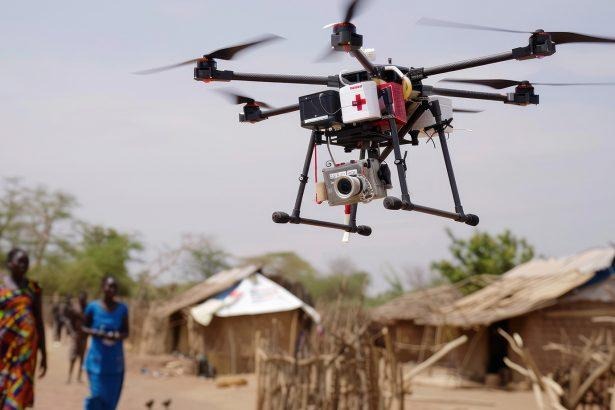
Agriculture remains the foundation of Africa’s economy, employing more than half of the continent’s workforce while supporting food security, exports, and rural livelihoods. Yet for decades, the sector has faced persistent challenges, including low productivity, limited mechanisation, inadequate financing, climate change, and inefficient supply chains. Today, however, agritech is transforming African agriculture, enabling millions of smallholder farmers to increase productivity, improve incomes, and build more resilient food systems.
Powered by rapid digital innovation, agriculture is evolving from a labour intensive industry into a data driven ecosystem supported by Artificial Intelligence (AI), the Internet of Things (IoT), satellite imagery, mobile technology, and advanced analytics. These technologies enable farmers to make better decisions, access financial services, minimise post harvest losses, and connect directly with profitable markets. Across several agricultural value chains, digital farming practices have significantly increased productivity while reducing waste and improving operational efficiency.
READ ALSO: Digital Farming: Scaling Mobile Agri-Tech to Strengthen Africa’s Food Security
One of agritech’s greatest contributions has been expanding access to agricultural finance. For many years, affordable credit remained beyond the reach of smallholder farmers, who often lacked the collateral required by conventional financial institutions. Today, agritech companies are using satellite imagery, digital farm records, and predictive analytics to assess farm productivity and creditworthiness.
Rather than relying exclusively on land ownership or physical assets, lenders can evaluate production potential using real time digital information. This approach is opening access to finance for thousands of farmers who were previously excluded from formal lending systems.
Nigeria’s ThriveAgric is among the companies leading this transformation. By combining technology with agricultural finance, the company connects farmers to credit, quality farm inputs, insurance, and guaranteed markets. Through predictive risk management and integrated support services, farmers are able to invest confidently in improved seeds, fertilisers, and modern farming practices while reducing financial uncertainty.
Agritech is also expanding market opportunities through digital commerce platforms that connect farmers directly with processors, retailers, exporters, and consumers. Traditionally, many producers relied on multiple intermediaries and received only a small share of the final market price. Business to business digital marketplaces improve price transparency, reduce transaction costs, and increase farmers’ bargaining power, enabling higher incomes and encouraging greater investment in agricultural production.
Artificial intelligence and the Internet of Things are transforming farm management through precision agriculture. Smart sensors monitor soil moisture, nutrient levels, and crop health in real time, enabling farmers to optimise irrigation and fertiliser application. AI powered weather forecasting also helps producers anticipate changing climate conditions, allowing them to adjust planting schedules, manage water resources more effectively, and reduce the risks associated with droughts, floods, and other extreme weather events.
Technology is also helping address one of Africa’s most persistent agricultural challenges: post harvest losses. Every year, substantial volumes of harvested crops are lost because of inadequate storage facilities, inefficient transport systems, and weak cold chain infrastructure. Agritech companies are responding by investing in solar powered cold storage, temperature controlled logistics, and digital inventory management systems that preserve food quality, reduce waste, and improve farmers’ profitability.
Mechanisation is another area undergoing rapid transformation. For many smallholder farmers, purchasing tractors and modern farming equipment remains financially out of reach. Mechanisation as a Service (MaaS) is changing this by allowing farmers to rent tractors and agricultural machinery when required through mobile platforms. Hello Tractor, often described as the “Uber for tractors”, enables farmers to access modern equipment without the high costs of ownership, improving efficiency and reducing labour shortages during planting and harvesting.
Nigeria has emerged as one of Africa’s leading agritech innovation hubs. A vibrant ecosystem of technology companies is modernising agricultural value chains while creating new economic opportunities for farmers. Companies such as Releaf are developing innovative processing technologies that improve efficiency within Nigeria’s oil palm industry. By locating processing equipment closer to farming communities, Releaf supports local value addition, reduces transportation costs, minimises post harvest losses, and increases incomes while strengthening domestic manufacturing capacity.
Despite this encouraging progress, significant challenges remain. Limited rural internet connectivity, inadequate digital literacy, poor transport infrastructure, inconsistent electricity supply, and restricted access to affordable finance continue to slow the adoption of agritech across many parts of the continent.
Climate change presents an additional challenge through increasingly unpredictable rainfall, prolonged droughts, and rising pest infestations that threaten agricultural productivity. Addressing these constraints will require stronger collaboration between governments, private sector investors, financial institutions, development partners, and research organisations.
Expanding rural broadband, improving digital literacy, investing in climate smart agriculture, strengthening transport infrastructure, and increasing support for agricultural research and innovation will enable more farmers to benefit from emerging technologies. Policies that encourage agritech entrepreneurship, expand digital financial inclusion, and promote research and development will further accelerate the sector’s transformation.
Agritech is reshaping the future of African agriculture by making farming more productive, sustainable, and commercially viable. Through digital finance, precision agriculture, artificial intelligence, mechanisation, and improved market access, technology is enabling farmers to produce more with fewer resources while strengthening food security and economic resilience. As these innovations continue to spread, Africa is demonstrating that the future of agriculture will depend not only on fertile land but also on the intelligent application of technology to unlock the continent’s immense agricultural potential.