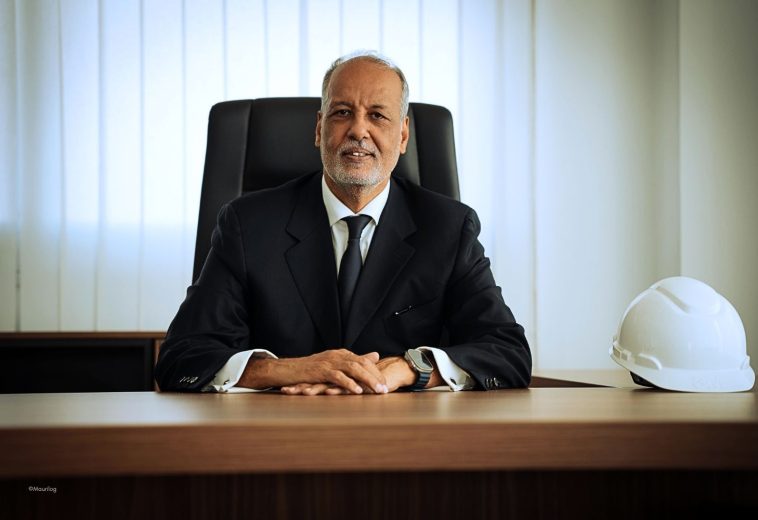
Leadership within organised business rarely attracts sustained public scrutiny, yet it often shapes policy outcomes as decisively as electoral politics. In South Africa, where economic recovery, infrastructure reform, and investor confidence remain structurally constrained, the role of business interlocutors has become increasingly consequential. It is within this context that Mr. Khulekani Mathe, Chief Executive Officer of Business Unity South Africa (BUSA), has emerged as a central figure in the country’s evolving public–private policy architecture.
Appointed CEO in January 2025, Mathe assumed leadership of South Africa’s apex business organisation at a moment of institutional strain: logistics bottlenecks were shaving an estimated 2–3 percentage points off GDP annually, energy insecurity remained a binding constraint on growth, and business–government trust was fragile following years of policy uncertainty. His appointment, following a two-year succession process after joining BUSA as Deputy CEO in February 2023, reflected a deliberate preference for policy continuity, technocratic depth, and cross-sector credibility.
READ ALSO: BREAKING: NETUMBO NANDI-NDAITWAH, MANDISA MAYA, OTHER LEADERS NAMED AFRICAN LEADERSHIP MAGAZINE PERSONS OF THE YEAR 2025
Business Unity South Africa: Institutional Weight and Economic Relevance
BUSA represents business organisations accounting for over 70% of South Africa’s formal economic output and employment, spanning mining, manufacturing, finance, logistics, agriculture, and services. Its mandate is not commercial execution but policy coordination, advocacy, and consensus-building between business, labour, and the state.
The organisation’s relevance has grown as South Africa’s economic challenges have become increasingly systemic rather than cyclical. According to National Treasury and South African Reserve Bank data, the economy has averaged sub-2% growth for over a decade, while fixed investment has fallen from 23% of GDP in 2008 to below 15%. In this environment, BUSA’s leadership functions less as a lobbying platform and more as a structural intermediary between capital formation and public governance.
Mathe’s Path to BUSA: Policy Before Position
Khulekani Mathe’s career path diverges from the typical corporate executive track, having first built extensive foundational experience within the public policy and strategic planning ecosystem. His background includes key roles in central government institutions such as the Presidency, the National Planning Commission (NPC) Secretariat, and the Department of Planning, Monitoring and Evaluation (DPME), equipping him with a deep, system-wide understanding of national development challenges and policy formulation before transitioning into organised business leadership.
During his tenure at the NPC Secretariat, Mathe played a substantive role in the development of South Africa’s National Development Plan (NDP) 2030, the country’s long-term socio-economic blueprint. He later served as Head of the Secretariat, a position that required coordinating across government departments, economic sectors, and social partners, experience that would later prove directly transferable to BUSA’s consensus-driven mandate.
Prior to joining BUSA, Mathe applied his policy expertise as the Head of Financial Inclusion at the Banking Association of South Africa (BASA), where his mandate centred on strategic, non-profit-driven objectives including banking sector transformation, developing small business financing frameworks, and advancing financial literacy initiatives, key work aimed at addressing the systemic exclusion of nearly 30% of South African adults from the formal financial system through a blend of policy advocacy, regulatory engagement, and industry reform.
Early Career and the Education Sector: An Uncommon Foundation
Earlier in his career, he spent 15 years in adult education, leading the Tembaletu Community Education Centre, an institution that gained two national awards and one international award for its work in adult learning and skills development. In 2007, Mathe was appointed Chairman of the Ministerial Committee on Adult Education Policy, contributing to reforms that influenced the architecture of post-school education and training.
He also participated in the establishment and governance of the Education Training and Development SETA, embedding him in South Africa’s skills-development framework long before skills shortages became a headline economic risk.
This background, combined with achieving his matric at age 27 before earning two Master’s degrees, has shaped a leadership profile rooted more in institutional systems than elite corporate mobility.
Leadership at BUSA: Focus Areas and Measurable Interventions
Since taking over as CEO, Mathe has anchored his leadership at BUSA on tackling South Africa’s foundational economic bottlenecks, prioritising systemic reform over isolated sectoral victories. His agenda has focused intensely on two critical crises: logistics and energy. He has positioned BUSA as a key private-sector voice in the National Logistics Crisis Committee, advocating for tangible private participation in ports and rail to reverse massive export losses. Simultaneously, he has championed scalable public-private partnerships for energy generation as a permanent solution to load-shedding, moving beyond temporary relief measures.
Furthermore, Mathe’s strategy is defined by a commitment to policy stability and coordination to rebuild investor confidence. He consistently argues for predictable, evidence-based policy signals across industrial incentives, crime prevention, and labour market reform, emphasising that long-term predictability is more valuable than short-term populist interventions. His approach underscores a belief that resolving these structural constraints is the essential foundation for sustainable economic growth and competitiveness.
His public remarks have reflected this stance, including his assertion:
“Can someone tell the politicians of all hues, they don’t own us, that we give them the right to govern and that just as we give it, we can take it away.”
The statement is not a rhetorical flourish but a framing of democratic accountability within economic governance, positioning business not as subordinate to politics, but as a stakeholder with agency.
Governance Credentials and Institutional Networks
Mathe holds professional governance credentials as a Certified Director and member of the Institute of Directors in South Africa (IoDSA), underpinning his leadership with formal governance expertise, which he applies through his board service on key national institutions, including the Ikusasa Student Financial Aid Programme (ISFAP) Foundation, the Human Resources Development Council, and the National Education Collaboration Trust.
He is also a Fellow of the African Leadership Initiative (ALI) under the Aspen Global Leadership Network and an alumnus of the Ford Foundation International Fellowship Programme, reinforcing his exposure to transnational leadership frameworks rather than purely domestic networks.
The African Leadership Award Significance
In February 2026, Mathe is set to receive the African Leadership Award for Excellence in Economic Policy & Private Sector Advocacy at the African Persons of the Year (POTY) Awards, organised by African Leadership Magazine (ALM) in Accra, Ghana.
The POTY Awards, now in their 15th edition, are widely regarded as Africa’s most prestigious leadership recognition platform, convening presidents, ministers, CEOs, and policy influencers. ALM’s reach, with over 30 million readers across 35+ countries, lends the event visibility and agenda-setting power.
The award recognises advocacy and influence, not policy outcomes. While Mathe’s leadership at BUSA has strengthened coordination and credibility between business and the state, South Africa’s core economic indicators, growth, employment, and logistics performance, remain structurally constrained. This is not a failure of individual leadership, but it does contextualise the limits of influence without execution authority.
In Mathe’s case, the recognition appears grounded in institution-building and policy mediation, rather than headline economic turnarounds. That distinction matters. It positions the award as an acknowledgement of process leadership, not a verdict on economic success.
Khulekani Mathe’s career reflects a rare continuity across education, public policy, financial inclusion, and organised business. His leadership at BUSA represents a technocratic, institution-first approach to economic advocacy at a time when South Africa’s challenges demand precisely that orientation.
The African Leadership Award he is set to receive should be understood neither as ceremonial excess nor as definitive validation. Rather, it marks recognition of a role that is inherently constrained: influencing outcomes without commanding levers of power.
In a continent where leadership narratives often oscillate between celebration and cynicism, Mathe’s record sits in a more sober space, defined by systems, negotiations, and incremental reform. Whether that model delivers long-term economic renewal will depend less on awards and more on whether South Africa’s political economy can translate coordination into execution.
The accolade, then, is not an endpoint but a moment of accountability.