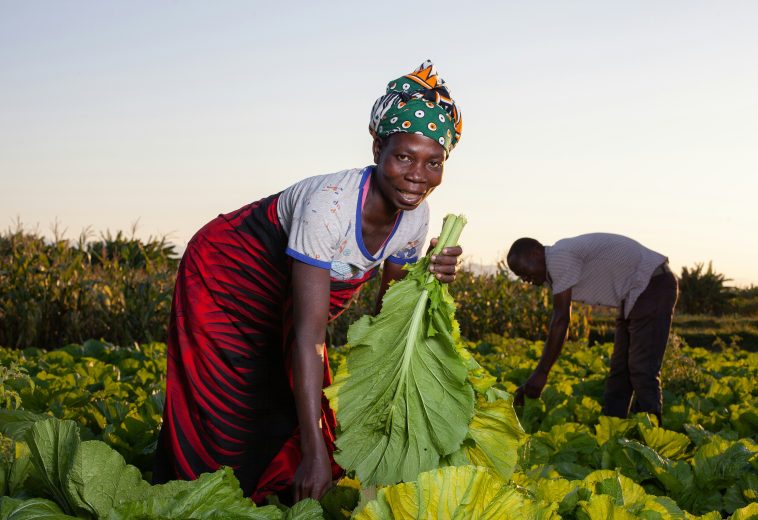
Africa’s agricultural sector is at a defining moment. While nearly 60% of the continent’s population depends on farming for their livelihood, the sector continues to face major challenges, including climate shocks, low yields, limited access to finance, and weak infrastructure. Yet recent advances in artificial intelligence (AI) present an opportunity to build greater resilience, improve productivity, and drive sustainable growth. As highlighted in the International Monetary Fund’s (IMF) July 2026 analysis, AI could transform African agriculture if the region makes strategic investments in infrastructure, digital skills, and supportive policy reforms.
The continent holds 60% of the world’s uncultivated arable land, yet it spends more than $75 billion annually on food imports, a figure that was projected to reach $110 billion by 2025. With nearly 60% of Africans engaged in farming and smallholder farmers producing roughly 80% of the continent’s food, agriculture remains central to livelihoods and economic development. Despite this, yields per hectare remain the lowest in the world, often less than half the average across developing economies. This gap between potential and performance is where artificial intelligence offers significant promise, providing tools to address longstanding structural inefficiencies.
READ ALSO: Smart Farming: The Boost for Digital Transformation of African Agriculture
AI-powered advisory platforms are proving that access to expert agricultural knowledge does not require expensive equipment. In Ghana and Nigeria, SMS-based AI systems provide real-time, localised recommendations on planting dates, fertiliser application, and pest control. When these advisories are combined with quality farm inputs, farmers have reported yield increases of between 30% and 50%. The economics are compelling: a service that costs only a few cents per message can generate hundreds of dollars in additional harvest value, significantly improving the profitability of small-scale farming.
Climate variability now costs African economies between 5% and 15% of GDP per capita annually, according to the African Development Bank. AI models that combine satellite imagery, historical climate records, and real-time weather data are helping to change this reality. These systems generate highly localised forecasts capable of predicting droughts, flood risks, and the best planting windows with increasing accuracy. For example, the IGAD Climate Prediction and Applications Centre in East Africa uses machine learning to improve seasonal forecasts, strengthening early warning systems that help millions of farmers and pastoralists prepare for extreme weather.
Pests and diseases destroy between 30% and 40% of Africa’s crop production every year, contributing to global losses valued at more than $200 billion. AI algorithms trained on satellite and drone imagery can identify early signs of crop stress, including fall armyworm infestations and nutrient deficiencies, weeks before they become visible to the human eye. Companies such as Germany’s PEAT have introduced applications like Plantix, which uses image recognition to diagnose crop diseases across Africa with more than 90% accuracy. This enables targeted intervention, reducing blanket pesticide use by as much as 60%, lowering production costs, protecting the environment, and conserving water through more precise irrigation.
Africa’s agricultural finance gap is estimated at $65 billion, largely because financial institutions consider many smallholder farmers too risky due to the absence of formal credit histories. FinTech platforms are helping to change this by using AI to analyse satellite images of farmland, historical weather data, and even mobile money transactions to create dynamic risk profiles. Kenya’s Apollo Agriculture, for instance, has used this approach to provide credit and insurance to more than 350,000 farmers while maintaining repayment rates above 90%. This data-driven approach transforms previously overlooked farmers into bankable clients, unlocking access to finance for seeds, fertiliser, and equipment.
Practical applications across the continent demonstrate the technology’s potential. Nigeria’s National Space Research and Development Agency, working with the Ministry of Agriculture, analyses satellite imagery every five days to map farm boundaries, monitor crop health, and forecast national harvests months in advance. Meanwhile, platforms such as eSusFarm in South Africa use AI to tailor recommendations based on soil conditions, weather patterns, and market prices for individual farmers. These platforms consistently report productivity gains of between 20% and 40%, showing that locally developed AI solutions can succeed even within existing infrastructure limitations.
However, no digital agricultural transformation can succeed without reliable electricity. The International Energy Agency estimates that more than 600 million Africans, around 43% of the continent’s population, still lack access to electricity, with the figure exceeding 50% across sub-Saharan Africa. Data centres, mobile networks, and digital devices all depend on reliable power. In many rural farming communities, electrification rates remain below 20%. Without greater investment in national grids and decentralised renewable mini-grids, many of the technologies designed to support farmers will remain out of reach.
Connectivity presents another major challenge. Internet penetration across Africa stood at approximately 38% in 2024, well below the global average of 68%. Although mobile broadband coverage continues to expand, affordable and reliable internet access remains limited in many rural communities. Africa is also home to only about 160 data centres, representing just 5.5% of the global total, with nearly 60% of that capacity located in South Africa. Routing data through overseas servers increases costs and creates delays for farmers relying on real-time AI services. The African Union’s Digital Transformation Strategy aims to achieve universal internet access by 2030, but current investment levels suggest this target will remain out of reach without a significant expansion of fibre-optic networks and last-mile connectivity.
Policymakers and development partners are increasingly aligning around four priorities. First, AI solutions must be designed for low-bandwidth platforms such as USSD and SMS. Kenya’s iShamba farmer helpline, which serves more than 1.2 million farmers through simple text and voice services, demonstrates the effectiveness of this approach. Second, data sovereignty is becoming increasingly important. Countries such as Nigeria are hosting agricultural monitoring data on local servers to strengthen trust, maintain control, and reduce dependence on foreign systems. Third, digital literacy programmes must expand rapidly. At present, fewer than 2% of African smallholders receive formal agricultural extension services. AI can significantly extend this reach, but only if farmers have the skills to use these technologies effectively. Finally, the African Continental Free Trade Area provides an opportunity to harmonise data policies and develop shared digital infrastructure, potentially unlocking an additional $20 billion in agricultural trade each year.
The IMF estimates that AI could increase Africa’s agricultural productivity by around 4% over the next decade, a gain that could lift millions out of poverty given the sector’s importance to employment. Research by the Malabo Montpellier Panel suggests that targeted digital interventions could add $11 billion annually to African agricultural value chains by 2030. Realising this potential, however, will depend on decisive action. As Africa’s population is projected to reach 2.5 billion by 2050, bringing a sharp increase in food demand, the continent faces a critical choice: invest now in electricity, connectivity, digital infrastructure, and skills to ensure AI benefits all farmers, or risk creating a two-tier agricultural economy where technologically advanced commercial farms prosper while millions of smallholders fall further behind. The technology already exists. The challenge now lies in whether Africa’s leaders, investors, and development partners can implement the reforms needed to deploy it fairly and at scale.