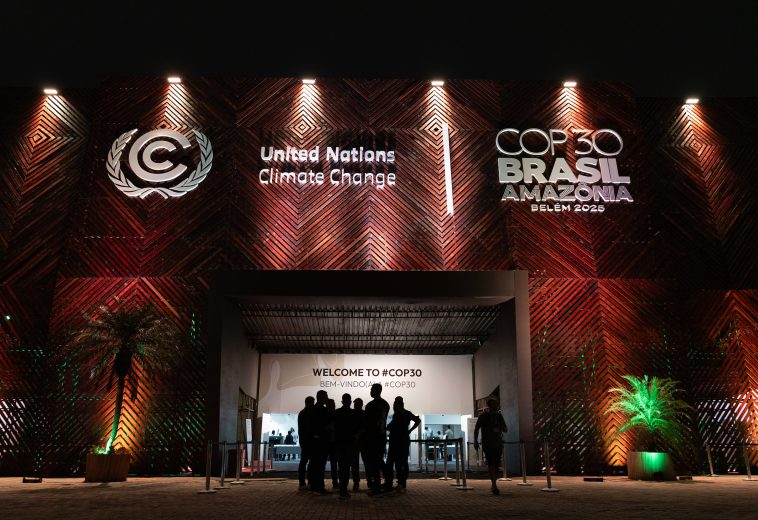
Africa contributes less than 4% of global greenhouse gas emissions, yet carries the heaviest burden of climate change. From deepening droughts to the floods that have swallowed structures in parts of the continent, Africa’s story is one of resilience strained to the breaking point. The ongoing 30th UN Climate Change Conference (COP30) in Belém, Brazil, presents an opportunity for Africa to step into the room not as a bystander but as a voice demanding justice, finance, and fair play.
For decades, global climate talks have swung between promises and excuses. But this year feels different. COP30 is being billed as the “COP of Implementation”, where lofty pledges are supposed to translate into tangible results. For Africa, it’s a test of whether global diplomacy can finally align with the continent’s realities, securing climate finance, unlocking technology, and building futures resilient to the floods, heatwaves, and storms that already define daily life.
READ ALSO: COP30 Opens in Belém: What Is Africa Move at the Amazon Summit?
At the heart of Africa’s position lies a clear and persistent grievance: the numbers don’t add up. More than ten years after rich nations pledged $100 billion annually to help developing countries fight climate change, less than ten percent of that sum reaches Africa. Meanwhile, climate shocks are wiping out as much as five percent of African GDP each year.
For Nigeria, the stakes couldn’t be higher. The country’s economy, already stretched by inflation, debt, and energy insecurity, is battered each year by floods and desertification. Yet even amid these challenges, African nations are reframing their story. A recent report by Power Shift Africa reminds the world that Africa holds nearly 30 percent of the planet’s critical minerals for green technology, vast renewable energy potential, and the world’s youngest workforce.
The message from Belém is clear: Africa isn’t simply a victim of the climate crisis. It’s a driver of global solutions from solar innovation to mangrove restoration. But realising that potential requires more than sympathy. It demands fair finance and genuine inclusion.
Nigeria’s case captures the paradox at the centre of Africa’s climate debate. The government has pledged to reach net-zero emissions by 2060, an ambitious target for an oil-producing nation where fossil fuels still account for over 80 percent of exports and a major share of government revenue.
Initiatives like the Energy Transition Plan (ETP) and the National Climate Change Act mark progress, but implementation remains inconsistent. The World Bank estimates Nigeria needs over $400 billion in clean-energy investments by 2050 to meet its goals, a number that dwarfs current domestic and donor funding combined.
Experts argue that Nigeria must pursue a pragmatic, phased transition expanding renewables while using natural gas as a cleaner bridge fuel. The country’s solar industry is already proving resilient, with middle-class households and SMEs increasingly shifting from diesel generators to off-grid solar systems. But scaling this transformation will require both domestic reforms and international credibility.
Market Challenges and Headwinds
Despite growing optimism about Africa’s green transition, major obstacles continue to threaten its momentum. Financing remains the biggest hurdle; the continent needs roughly $1.3 trillion annually by 2030 to meet climate goals, yet receives less than 12 percent of that amount, mostly in the form of loans that exacerbate debt. At the same time, weak policy enforcement, bureaucratic inefficiency, and poor coordination between ministries and regional bodies have slowed implementation, leaving well-crafted climate frameworks largely ineffective on the ground.
Governance challenges and global economic conditions further compound the crisis. Concerns about transparency and corruption have made international lenders hesitant, while high interest rates and slow global growth have tightened development funding. Political instability across parts of Africa adds another layer of uncertainty, with leadership changes and shifting priorities often stalling key climate projects. Together, these headwinds reveal a continent ready to act, but constrained by structural, financial, and political realities that demand both domestic reform and fairer global engagement.
To understand Africa’s position at COP30, one must revisit history. The continent’s relationship with the industrialised world has long been defined by the extraction of people, minerals, and now, atmospheric space. While Europe and North America industrialised through carbon-intensive growth, Africa was left to bear the brunt of environmental degradation without the infrastructure to cope.
Since the industrial revolution, the United States and the European Union together account for more than 50 percent of historical carbon emissions, while Africa’s contribution remains marginal. Yet, as global warming intensifies, it’s African communities from Chad’s shrinking Lake to Mozambique’s storm-swept coastlines that face the harshest consequences.
Experts like Nnimmo Bassey of the Health of Mother Earth Foundation argue that this imbalance represents a “climate debt” the West owes Africa. “The arithmetic of net-zero,” he says, “often allows polluters to keep polluting while claiming compensation through carbon offsets. True justice means binding cuts by the major emitters, not voluntary pledges.”
This historical lens reframes the debate: Africa isn’t begging for aid. It’s demanding repayment for damage caused by others and respect for its right to industrialise sustainably.
The Hypocrisy of the West
It’s impossible to discuss Africa’s climate struggle without confronting Western hypocrisy. Developed nations that built their wealth on fossil fuels now lecture Africa on clean energy while continuing to drill, burn, and subsidise their own industries.
When Europe faced an energy crisis after Russia’s invasion of Ukraine, it rushed back to coal and gas. Yet when Nigeria or Mozambique proposes using gas as a transitional energy source, the same countries object. The double standard is glaring.
The failure to meet the $100 billion annual finance pledge is another stain on Western credibility. Africa receives barely 3 to 4 percent of total global climate finance, despite being the continent most vulnerable to its effects. For leaders like Kenya’s President William Ruto, this is not just economics; it’s moral betrayal. “You can’t ask us to go green without giving us the means,” he said recently.
This is where the tension lies at COP30: the Global North preaches responsibility but practices protectionism; Africa calls for justice, not charity.
The data paints a stark picture of global climate inequality. Africa contributes less than 4% of global greenhouse gas emissions, yet bears the brunt of the crisis with seven of the world’s ten most climate-vulnerable nations located on the continent. Meanwhile, the United States and the European Union account for nearly half of all historical emissions, and the average North American emits more CO₂ in a single month than most Africans do in a year. Despite this imbalance, funding for adaptation remains woefully insufficient: developing nations require about $310 billion annually by 2035, but only a small fraction of that is being delivered.
Future Trends and Opportunities
Despite formidable headwinds, Africa’s climate future is increasingly defined by opportunity rather than crisis. The continent holds vast potential to lead the next wave of green innovation through its rich ecosystems, renewable energy resources, and growing pool of climate-tech talent. Carbon markets and biodiversity credits could transform regions like the Congo Basin and West African mangroves into global centres for sustainable ecosystem value chains, while non-timber forest products, ecotourism, and community forestry offer scalable paths to job creation and biodiversity protection.
Technology is also reshaping Africa’s environmental landscape, with startups deploying AI, drones, and satellite imagery to monitor deforestation and predict climate risks. Just as importantly, the rise of inclusive conservation, where Indigenous and local communities co-manage natural resources, is fostering more resilient and equitable systems. If backed by coherent policy and sustained investment, Africa could soon emerge as the world’s green growth frontier, driving innovation in renewable energy, sustainable agriculture, and green minerals critical to the global clean energy transition.
As COP30 unfolds in Belém, the story of Africa and Nigeria in particular is one of both urgency and agency. The continent stands not merely as a casualty of the world’s excesses, but as a crucible of solutions that the rest of the planet needs.
The road ahead is steep. But if Africa can align its domestic reforms with assertive climate diplomacy, if Nigeria can bridge ambition with implementation, and if the world can replace rhetoric with responsibility, then perhaps COP30 could mark the moment when Africa stopped waiting for justice and started shaping it.
Because the truth is simple: saving Africa’s climate future is not just Africa’s fight, it’s humanity’s test.