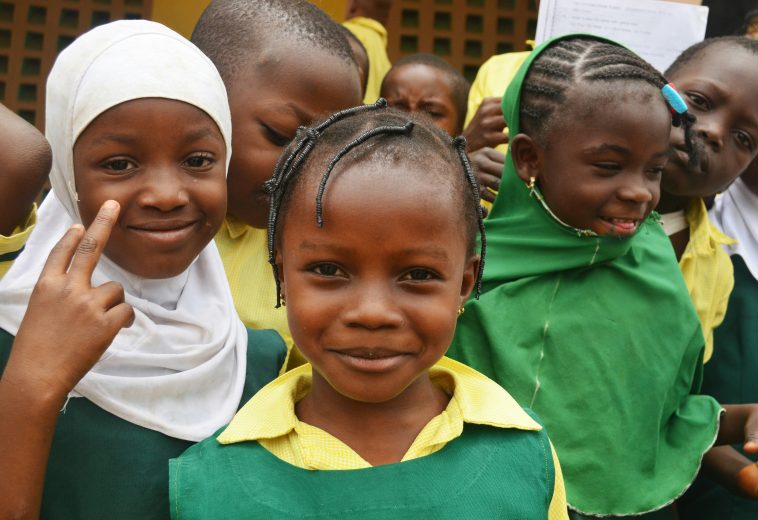
Sub-Saharan Africa has made real strides in getting girls into primary school. UNESCO reports that the region achieved gender parity in primary enrolment in 2021, a milestone worth celebrating. Yet parity at the school door is only the beginning. The next step is ensuring girls stay in school, complete secondary education, and gain equal access to the opportunities education creates.
UNESCO data cited in the report shows that about 97 girls were enrolled for every 100 boys in lower secondary school in 2024. Yet only 47% of girls completed lower secondary education, while just 28% completed upper secondary education in sub-Saharan Africa. These figures reflect different stages of education and highlight the distinction between enrolment and completion. Together, they point to a persistent retention problem. The World Bank estimates that approximately 34 million adolescent girls of secondary school age remain out of school across the region.
READ ALSO: Education Reform Now: Africa’s Youth Bulge and Economic Transformation
Regional averages conceal severe disparities. UNESCO’s gender equity analysis finds that in rural areas, fewer than six girls complete upper secondary education for every ten boys. Among the poorest households, the figure falls to just three girls for every ten boys. In Angola, Mozambique and pre-war Sudan, these gaps are particularly acute. Girls from the poorest households face some of the most extreme barriers, which become more pronounced at higher levels of education. At upper secondary level, fewer than seven of the poorest girls attend school for every ten of the poorest boys.
UNESCO’s International Institute for Capacity Building in Africa (IICBA) provides regional averages showing lower secondary completion rates of 47.5% for girls and 48.8% for boys, compared with upper secondary completion rates of 27.2% for girls and 30.6% for boys. While the overall gaps appear modest, they widen considerably among marginalised groups. In Chad, for instance, lower secondary completion stands at 15.0% for girls, compared with 37.6% for boys, a gap of more than 22 percentage points.
Child marriage remains a major driver of girls’ school dropout. UNICEF estimates that in sub-Saharan Africa, almost one in three girls (31%) marries or enters a cohabiting relationship before the age of 18, while 9% marry before turning 15. The prevalence is considerably higher in rural areas, where around 40% of girls marry before 18, compared with 16.8% in urban areas. UNESCO estimates that if all girls completed secondary education, child marriage would decline by 64%, demonstrating the close relationship between continued schooling and protection from early marriage.
Evidence from 14 African countries shows that making lower secondary education both free and compulsory was associated with an additional 1.6 years of educational attainment for girls and a 14-percentage-point increase in secondary completion, compared with making education free alone. This supports a broader policy approach built around legal entitlement, effective enforcement, adequate school capacity and practical assistance with the costs that remain, including transport, uniforms and learning materials.
Conflict is another major obstacle to girls’ education. UNESCO notes that five of the ten most conflict-affected countries in 2024 were in Africa. Displacement interrupts schooling, destroys facilities and makes journeys to school dangerous. Education plans for affected areas must therefore include measures to maintain continuity, such as temporary learning spaces, flexible learning arrangements and support for displaced students. The Central African Republic illustrates how these challenges can compound existing inequalities: primary completion stands at 40.0% for girls, compared with 58.4% for boys, while upper secondary completion for girls is just 9.2%.
Equal access to education must also translate into equal opportunities within the classroom. UNESCO’s Cracking the Code initiative addresses barriers that discourage girls from pursuing science, technology, engineering and mathematics (STEM). Its #HerEducationOurFuture initiative highlights persistently low participation among women in STEM fields, alongside a significant digital gender divide. Teacher training, inclusive learning materials and practical programmes can challenge assumptions about which subjects and careers are suitable for girls.
Gender parity measures the relative participation of girls and boys; it does not establish whether either group is receiving a quality education. Completion rates show whether students reach the end of an education level, but they do not, on their own, explain why others leave. Policymakers therefore need both indicators, alongside local evidence on costs, safety, distance and learning outcomes. Results should also be disaggregated by location, household income, disability and displacement status, as regional averages can conceal severe barriers in individual communities.
Removing tuition fees alone is insufficient. Targeted stipends and cash transfers can help households cover transport and school materials, particularly when they reach families facing the greatest barriers and are predictable enough to support household planning. Safe transport and additional local school provision can reduce the risks and costs of travelling long distances to secondary school. Schools must also establish clear procedures for preventing and responding to harassment and violence, including confidential reporting channels and appropriate support for affected students.
Sub-Saharan Africa’s primary-school gender parity milestone demonstrates that policy can expand access at scale. The next task is ensuring that girls continue learning through adolescence and complete secondary education. This requires more than free tuition. It demands affordable attendance, safe journeys to school, protection from violence, support in fragile settings and classrooms that encourage girls to pursue every subject.
The true measure of progress is not simply how many girls enter school, but whether they can remain, learn and graduate with the same opportunities as boys. UNESCO’s data highlights the gap between enrolment and completion: for every 100 boys enrolled in lower secondary school, there were approximately 97 girls, yet far fewer girls complete secondary education. Bridging this gap requires connected solutions that address cost, safety, distance and the quality of learning.