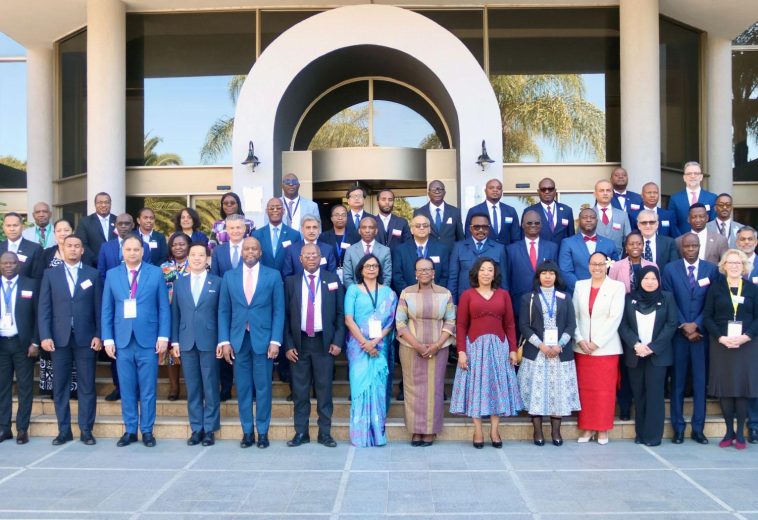

Can stronger regional connectivity make African trade more competitive and unlock new investment opportunities? Namibia is placing this question at the centre of a regional economic meeting in Windhoek from 10 to 13 November 2026, bringing together policymakers, development institutions and private-sector stakeholders to examine practical ways of deepening cooperation across Eastern and Southern Africa.
The meeting, convened by the Government of Namibia in collaboration with the United Nations Economic Commission for Africa (ECA), is the Joint Session of the Intergovernmental Committee of Senior Officials and Experts for Eastern and Southern Africa. Its theme, “Bridging Eastern and Southern Africa: Connectivity, Trade and Investment for a More Integrated Continent”, reflects the need to move regional cooperation beyond policy commitments towards implementation.
READ ALSO: PAPSS Expansion: Transforming African Cross-Border Payments and Trade Integration
Discussions are centred on four strategic areas: energy connectivity and regional power markets; trade facilitation and transport corridors; investment finance and digital innovation; and tourism as a driver of services trade and employment. These priorities address practical barriers that continue to increase the cost of doing business across African markets.
For businesses, fragmented transport systems, border delays, limited access to finance and inconsistent regulations can make regional expansion expensive. Improving transport corridors and simplifying trade procedures could reduce these barriers, allowing producers to reach larger markets and making cross-border supply chains more competitive.
Energy connectivity is equally important. Many African economies continue to face electricity access and reliability challenges, which constrain manufacturing, agro-processing and other productive activities. Stronger regional power markets could support electricity trade between countries, improve the use of available generation capacity and help businesses access more dependable energy supplies.
The discussions also connect to the African Continental Free Trade Area (AfCFTA) and the COMESA–EAC–SADC Tripartite Free Trade Area. Both frameworks seek to deepen economic integration, but their success depends on the infrastructure, regulations and financial systems that make trade possible in practice.
Namibia’s role as host is significant because of its position along important Southern African transport and logistics routes. Its Atlantic coastline, port infrastructure and regional connections allow it to contribute to wider discussions about how land-linked economies can access international markets more efficiently. However, the regional meeting should be viewed as a platform for policy coordination, not evidence that new infrastructure or investment agreements have already been secured.
The participation of governments, regional economic communities, development partners, research institutions and private-sector representatives is intended to help identify practical areas for cooperation. Recommendations from the meeting are expected to inform future regional initiatives and support the wider continental integration agenda.
For African businesses, the value of such cooperation will ultimately be measured by whether it lowers operating costs, improves access to markets and creates investment opportunities. Small and medium-sized enterprises, in particular, stand to benefit when customs procedures become more predictable and transport networks make it easier to move goods across borders.
The private sector also has a role in ensuring that regional integration produces productive investment rather than remaining a government-led discussion. Public-private partnerships, regional financial institutions and development banks can help mobilise capital for infrastructure projects, while businesses can identify commercial opportunities created by improved connectivity.
The challenge, however, is implementation. Regional initiatives often face delays arising from financing gaps, regulatory differences, institutional coordination and competing national priorities. The Windhoek meeting therefore provides an opportunity to identify where cooperation can produce measurable results and how governments can maintain accountability beyond the conference room.
For Namibia and its regional partners, deeper integration could strengthen trade, attract investment and support more resilient economies. The wider African lesson is that connectivity is not simply about building roads, ports or power lines. It is about linking infrastructure to productive industries, regional markets and opportunities for citizens.
If the discussions in Windhoek lead to coordinated policies and bankable projects, they could contribute to a more connected Eastern and Southern Africa. The measure of success, however, will be the practical improvements businesses and communities experience after the meeting concludes.