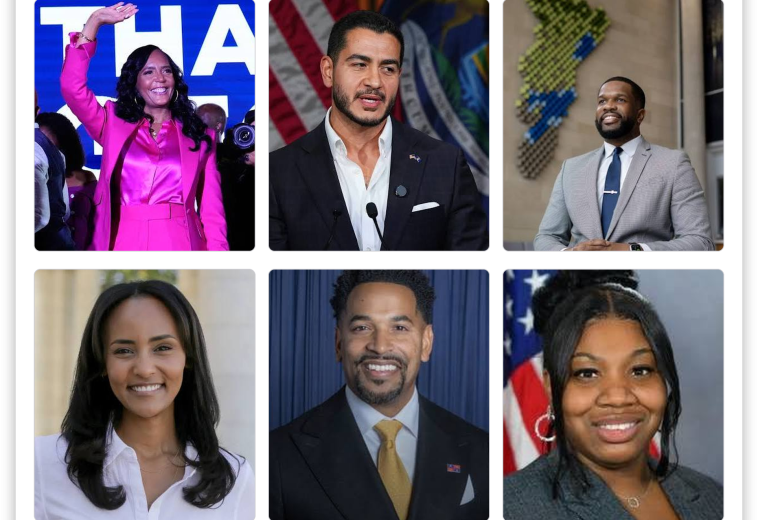
The 2026 United States midterm elections have produced significant gains for politicians with African backgrounds and family connections to the continent. Their victories across federal and state-level politics represent an important development in the diversity of American public life. However, their significance extends beyond the symbolism of representation to questions about political influence, democratic participation and the relationship between diaspora communities and their countries of origin.
Three congressional victories illustrate the breadth of these developments. Abdul El-Sayed, the son of Egyptian immigrants, defeated Republican Mike Rogers in Michigan’s Senate election, becoming the first Muslim elected to the United States Senate. Melat Kiros, a 29-year-old Ethiopian immigrant, won Colorado’s 1st Congressional District, becoming the first woman from Generation Z elected to Congress. In Maryland, Adrian Boafo, the son of Ghanaian immigrants, won the 5th Congressional District, succeeding retiring Democratic representative Steny Hoyer, who had represented the district since 1981.
READ ALSO: Beyond Elections: Strengthening Africa’s Democratic Institutions
These victories reflect different political journeys and constituencies. El-Sayed’s campaign centred on healthcare reform, affordability and reducing corporate influence in politics. His victory followed a divisive contest in which his Muslim faith and foreign-policy positions became targets of political attacks. Kiros, a lawyer and progressive Democrat, campaigned on Medicare for All, affordable housing, universal childcare and greater accountability in government. Boafo’s campaign focused on economic affordability, healthcare and employment opportunities for Maryland residents.
Their priorities underline an important distinction: these politicians were elected to represent American constituents, not African governments or the continent as a collective political interest. Their backgrounds may provide valuable perspectives on African and immigrant experiences, but shared ancestry does not automatically produce a common foreign-policy position.
Representation beyond individual victories
The wider election results also point to important changes in Black political representation. According to the Joint Centre for Political and Economic Studies’ post-election assessment, the incoming Senate is expected to have at least six Black members, potentially rising to seven depending on the outstanding Mississippi race. This would represent a historic level of Black representation in the chamber. Three Black women are also expected to serve simultaneously for the first time.
The gubernatorial results produced another milestone. Five Black governors-elect are expected to serve simultaneously from January 2027, more than the previous record of three Black politicians ever elected to governorships. The group includes Keisha Lance Bottoms in Georgia, Byron Donalds in Florida, David Crowley in Wisconsin, Aaron Ford in Nevada and Maryland’s Wes Moore, who secured re-election.
These developments should be understood within the broader history of Black American political participation. African immigrants and their descendants, African Americans whose histories are rooted in slavery and segregation, and other communities of African descent have distinct historical experiences. Their political identities may overlap, but they should not be treated as interchangeable.
The limits of shared heritage
For African countries, the emergence of more elected officials with direct family connections to the continent creates opportunities for engagement. Governments, universities, business organisations and diaspora institutions may find additional channels through which to present African perspectives in American policy discussions.
However, such engagement must recognise the constitutional responsibilities and political incentives shaping these officials’ decisions. A member of Congress is accountable to voters in their district or state. Their positions on trade, immigration, security, development assistance and international relations will be influenced by domestic political priorities, party commitments and legislative negotiations.
El-Sayed’s victory, for example, does not automatically translate into a change in Washington’s policy towards Egypt or the wider Middle East. Similarly, Kiros’s Ethiopian background does not make her a representative of Ethiopia’s foreign-policy interests. Their influence on Africa-related legislation will depend on the positions they adopt, the coalitions they build and the institutional responsibilities they acquire.
The practical indicators of influence will therefore emerge through their work in Congress and state legislatures: committee assignments, legislation sponsored, oversight activities, budget decisions and participation in policy discussions affecting African countries and diaspora communities. These are more meaningful measures than ancestry or campaign rhetoric alone.
From representation to institutional influence
The 2026 results also offer lessons for African diaspora communities seeking greater participation in political institutions. El-Sayed’s Senate victory and Kiros’s defeat of a long-serving incumbent in the Democratic primary demonstrate the importance of sustained grassroots organisation, issue-based campaigning and the ability to mobilise voters beyond traditional political networks.
For African governments and diaspora organisations, the opportunity lies in building constructive, transparent and sustained relationships with elected officials. Engagement should focus on areas of mutual interest, including trade, education, technology, investment, research partnerships and cultural exchange. It should also recognise that diaspora politicians are independent public officials with their own electoral mandates.
The victories of El-Sayed, Kiros and Boafo represent meaningful advances in the visibility of people with African roots in American political institutions. Yet representation is only the beginning of political influence. Whether these gains translate into stronger institutional participation and meaningful policy outcomes will depend on the legislative work, public accountability and political coalitions that follow.
For Africa, the opportunity is not to claim these officials as representatives of the continent, but to engage them as important voices within American democracy. Their lasting significance will be determined not simply by where their families originated, but by the policies they advance and the public responsibilities they fulfil.