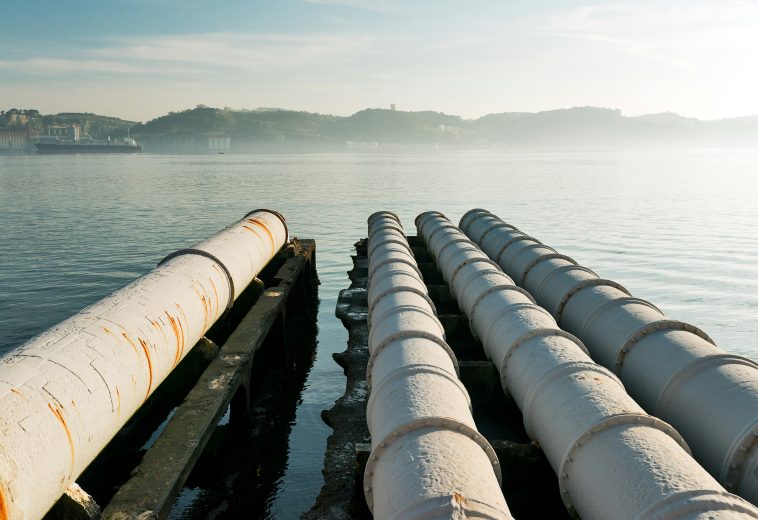
What could a strategically located fuel terminal mean for Africa’s ability to trade energy across its borders? Aliko Dangote’s newly launched US$2.5 billion fuel-storage and regional pipeline project at Namibia’s Walvis Bay offers a significant opportunity to strengthen Southern Africa’s energy distribution network, connect coastal supply infrastructure with landlocked markets and expand the commercial reach of African refining.
Announced on 4 November 2026 at a ceremony attended by Namibian President Netumbo Nandi-Ndaitwah, the project represents an important development in Dangote’s ambition to build an integrated African energy business. According to Reuters, the proposed tank farm will have a storage capacity of approximately 600 million litres, equivalent to four million barrels. This includes 360 million litres of diesel, with the remainder allocated to petrol. Dangote said the project is expected to be completed within 18 to 20 months.
READ ALSO: Dangote Group: Exploring a Bigger Industrial Investment Footprint in Egypt
The proposed facility would be eight times larger than Namibia’s existing National Oil Storage Facility, which has a capacity of 75 million litres and is operated by the Namibia National Petroleum Corporation (NAMCOR). Its strategic advantage lies in Walvis Bay’s coastal location, which provides access to maritime fuel shipments and established regional transport routes.
The project also includes provisions for a proposed 1,700-kilometre regional pipeline connecting Walvis Bay with Botswana, Zimbabwe and Zambia, with the Democratic Republic of Congo potentially included. If developed, the network could reduce the logistical constraints facing landlocked countries that depend on imported petroleum products. However, the pipeline remains a proposed component, and its final route, financing arrangements and participating countries will require further clarification.
The current announcement also represents a substantial change from the project’s earlier development specifications. In August 2026, Dangote Industries Namibia initiated an environmental approval process for a proposed 1.6-million-barrel petroleum storage facility on approximately 70 hectares at Farm 58 near Walvis Bay. That application concerned land subdivision and preparation for development, with a separate environmental impact assessment required before construction could proceed. The four-million-barrel capacity reported at the November launch therefore reflects a significantly expanded announced scope. The relationship between the earlier environmental application and the latest project design will need to be clarified through subsequent regulatory documentation.
Dangote’s investment also builds on the growing commercial importance of his Nigerian refinery. The 700,000-barrel-per-day facility near Lagos has become an increasingly significant supplier of refined petroleum products to international markets. According to the United States Energy Information Administration (EIA), Nigeria’s seaborne petroleum-product shipments averaged 561,000 barrels per day in the second quarter of 2026, compared with an annual average of 79,000 barrels per day in 2023. Exports to other African countries reached nearly 120,000 barrels per day, up from 89,000 barrels per day in 2025.
The EIA also reported that Nigeria’s seaborne petroleum-product imports declined from nearly 400,000 barrels per day in 2023 to less than 130,000 barrels per day in the second quarter of 2026. These figures demonstrate how increased domestic refining capacity can reshape national supply patterns while creating opportunities for regional exports.
The refinery’s financial performance further illustrates the scale of this industrial transformation. Its first-half 2026 financial disclosures recorded net profit of approximately US$1.82 billion on revenue exceeding US$13 billion, reversing a US$476 million loss for the full year 2025. The Walvis Bay project could extend the commercial reach of this refining capacity by providing additional storage and distribution infrastructure closer to Southern African markets.
For Namibia, the investment comes at a particularly important moment. Fuel prices increased from 4 November, with petrol rising by N$2 per litre and diesel by N$3. The government attributed the adjustment to higher shipping costs, vessel-waiting charges and exchange-rate pressures. Although the proposed terminal cannot provide immediate relief from these increases, additional storage and distribution capacity could strengthen supply resilience over time. Its eventual contribution will depend on operating arrangements, supply contracts and the extent to which efficiency gains are reflected in consumer prices.
The existing National Oil Storage Facility already provides an important foundation for national energy security. NAMCOR records its capacity at 75 million litres, supported by a tanker jetty and multiple petroleum-product pipelines. The proposed Dangote facility would therefore add substantial private-sector infrastructure to an existing public-sector storage system, potentially creating opportunities for greater competition, improved logistics and more diversified supply arrangements.
Nevertheless, the project’s regional benefits will depend on how effectively local economies participate. A pipeline connecting coastal infrastructure to inland markets could alter existing fuel transportation patterns, including the role of road-haulage businesses. Namibian logistics operators, contractors and workers will need meaningful opportunities to participate in construction, maintenance and distribution. Transparent procurement arrangements, technical training and local employment commitments would help ensure that the investment generates benefits beyond fuel storage and transit.
The most important measure of the Walvis Bay project’s success will therefore be its implementation. Confirmed financing, environmental approvals, construction contracts, commercial supply agreements and binding commitments from participating countries will determine whether the proposed regional network becomes operational.
For Africa, the broader opportunity extends beyond a single fuel terminal. The continent’s ability to refine, store, transport and distribute more of its own petroleum products will influence its trade competitiveness, industrial development and energy security. Walvis Bay could become an important link in that ambition, connecting African production with African markets and demonstrating how strategic infrastructure can support deeper regional economic integration.