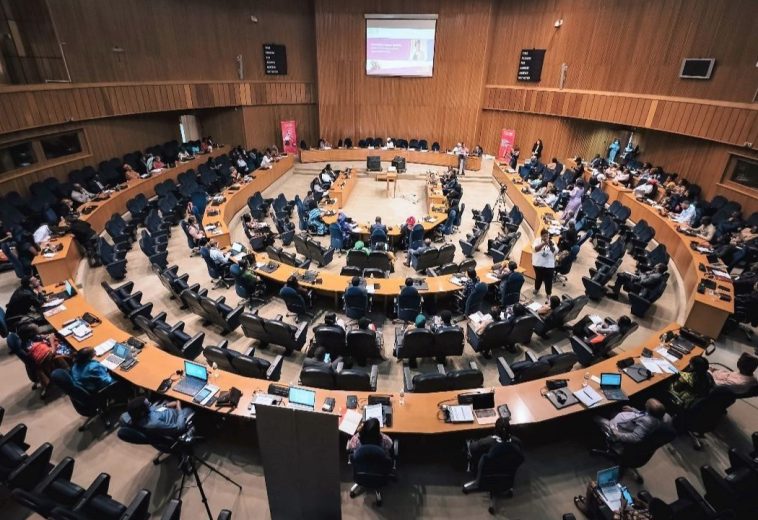
Africa’s development ambitions are vastly colliding with a revolving global financial environment. The African Development Bank’s decision to deepen ties with Arab development finance institutions is less a diplomatic gesture and more a strategic recalibration. As Western donor countries retrench and fiscal pressures mount, the AfDB’s first formal high-level engagement with the Arab Coordination Group (ACG) in Abidjan indicates a deliberate shift: Africa is reorganising its development finance architecture around partners willing to think long-term, co-invest at scale, and share strategic priorities.
The recent Abidjan meeting between the African Development Bank (AfDB) and the Arab Coordination Group (ACG) signifies a fundamental turning point, moving beyond simply securing more funding to reshape how Africa mobilises capital and structures its development partnerships. While Arab institutions have a decades-long history of financing critical infrastructure across the continent, their efforts have often been fragmented and bilateral. This new formalised alliance with the AfDB, Africa’s premier multilateral lender, establishes the strategic, programmatic framework needed to channel this substantial capital into a coordinated, high-impact engine for Africa’s next phase of economic transformation.
READ ALSO: Inside AfDB’s $11bn Replenishment and What It Means for Africa
Under the leadership of its new president, Sidi Ould Tah, the AfDB has openly acknowledged a hard truth: Africa’s development financing gap is widening rapidly. External shocks from global inflation and rising interest rates to climate disasters and geopolitical fragmentation have pushed the continent’s annual infrastructure and development funding shortfall to approximately US$402 billion.
The African Development Bank is Africa’s largest development finance institution, both in balance sheet strength and strategic reach. Established in 1964, the Bank was created to mobilise resources for the continent’s economic and social development, financing projects that private capital alone would not support.
In 2024, the African Development Bank (AfDB) achieved a historic record with total commitments of US$11 billion, while also directing over half of its approvals, 5.5 billion, toward climate finance. The bank reinforced its financial foundation with an ADF-17 replenishment of US$11 billion, marked by inaugural contributions from 23 African nations. Maintaining its top-tier AAA credit rating with a stable outlook, the AfDB continues to drive its development agenda through the “High 5s” strategic framework, focused on powering, feeding, industrialising, and integrating Africa, as well as improving the quality of life for its people. While the AfDB does not have a GDP of its own, it plays a central role in shaping Africa’s macroeconomic trajectory. The Bank projects Africa’s real GDP growth at approximately 3.9–4.2% in 2025, with East Africa leading and Southern Africa lagging due to structural constraints.
The Arab Coordination Group (ACG), established in 1975, is a strategic alliance of leading Arab development finance institutions, including the Arab Bank for Economic Development in Africa (BADEA), the OPEC Fund, the Saudi, Kuwait, Abu Dhabi, and Qatar Funds for Development, and the Islamic Development Bank. Its historical footprint in Africa is significant, with cumulative financing exceeding US$220 billion invested in over 5,000 projects. This funding has primarily targeted critical sectors such as transport, energy, water, agriculture, and social infrastructure, with a strong geographic focus on Sub-Saharan Africa and the Sahel.
Despite this substantial investment, Arab financing in Africa has historically been fragmented, often delivered bilaterally and on a project-by-project basis without full alignment with broader continental strategies. The African Development Bank’s (AfDB) current initiative aims to transform this substantial but dispersed capital into a more coordinated and strategic source of high-impact development finance for the continent.
The recent Abidjan meeting and formal declaration mark a pivotal shift from informal, ad hoc cooperation to a structured strategic partnership between the African Development Bank and Arab financiers. This new framework establishes a dedicated coordination platform for joint project identification and financing, aligning priorities around key sectors such as energy access and transition, climate resilience, food security, industrialisation, and private-sector development. Critically, the partnership emphasises a move towards large-scale, multi-country investments over isolated national projects and commits to providing the long-term financing necessary for major infrastructure with extended payback periods.
According to OPEC Fund Vice President Rami Ahmad, the focus will move toward “big-ticket, regional investments” capable of transforming economic corridors rather than delivering incremental gains.
The strategic partnership between the African Development Bank (AfDB) and the Arab Coordination Group (ACG) effectively merges complementary strengths. While the AfDB offers deep project expertise, policy guidance, and continental legitimacy, its impact is constrained by capital limitations. Conversely, the ACG provides substantial pools of patient capital and long-standing infrastructure financing experience, but historically with less integration into Africa-wide strategies. Together, they unlock a powerful synergy, enabling scaled capital mobilisation for transformative projects, reducing duplication, and better aligning massive financing with Africa’s long-term development priorities.
This collaboration is a critical response to significant market challenges. The AfDB operates in a difficult environment characterised by global liquidity tightening, rising debt vulnerabilities, and increasing climate shocks, which strain traditional funding. The partnership directly counters these headwinds by combining the AfDB’s strategic leadership with the ACG’s financial depth, creating a more stable and scalable funding model resilient to global volatility. This allows for a continued focus on the AfDB’s core developmental impacts, from connecting millions to electricity and improving food security to de-risking private sector investments.
This partnership strategically positions Africa to seize future opportunities, such as developing regional infrastructure corridors and driving climate-resilient investments. With the ACG’s potential allocation of up to US$50 billion for African initiatives, this structured alliance represents a fundamental evolution in development finance. It moves beyond fragmented assistance toward a coordinated model capable of financing continental transformation at scale, marking a potentially generational shift in Africa’s development trajectory amidst changing global dynamics.